Brand New vs Fairly Used Mikano Generators in Nigeria
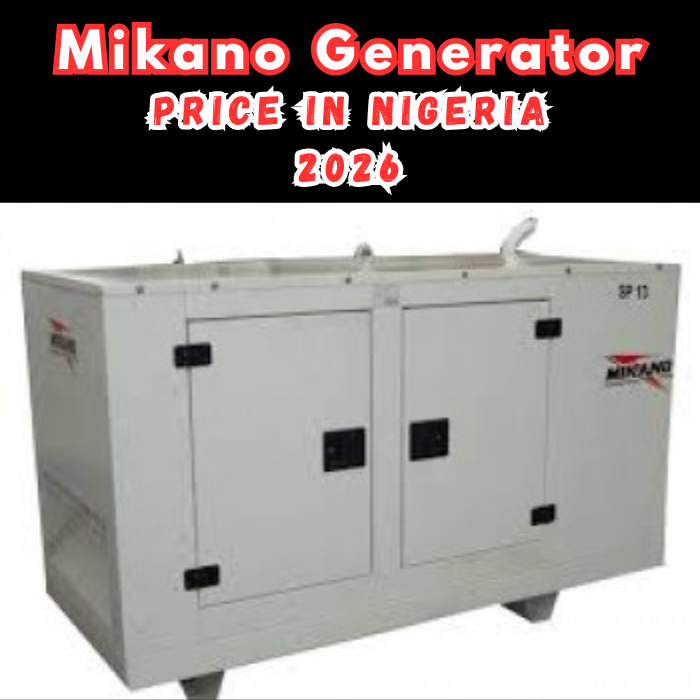
If you are searching for Mikano generator price in Nigeria, chances are you are trying to make one important decision: should you buy a brand new Mikano generator or go for a fairly used one? That is a smart question, because the price gap between both options can be significant, and if you do not understand what you are paying for, it is easy to spend too much or buy the wrong unit entirely.
I have seen this happen many times with buyers in Nigeria. Some people rush to buy a fairly used Mikano generator because the upfront cost looks cheaper, only to discover later that the machine has hidden faults, high maintenance needs, or poor fuel efficiency. On the other hand, some buyers stretch their budget for a brand new unit without first asking whether they truly need a new generator for their current power demands. In both cases, the real issue is not just price. It is value for money, long-term reliability, and suitability for the intended use.
That is why this comparison matters. Mikano is one of the most recognized generator brands in Nigeria, especially for homes, offices, hotels, hospitals, event centers, factories, schools, and commercial buildings that need dependable backup or primary power. But when people search for Mikano generator prices, they are usually not looking for figures alone. They also want to know which option is wiser, what the risks are, how much they should budget, and whether buying fairly used is actually worth it.
In this guide, I will compare brand new and fairly used Mikano generator prices in Nigeria, explain the major factors that affect cost, and help you understand what you are really getting on both sides. If your goal is to buy wisely and avoid expensive mistakes, this comparison will give you a much clearer picture.
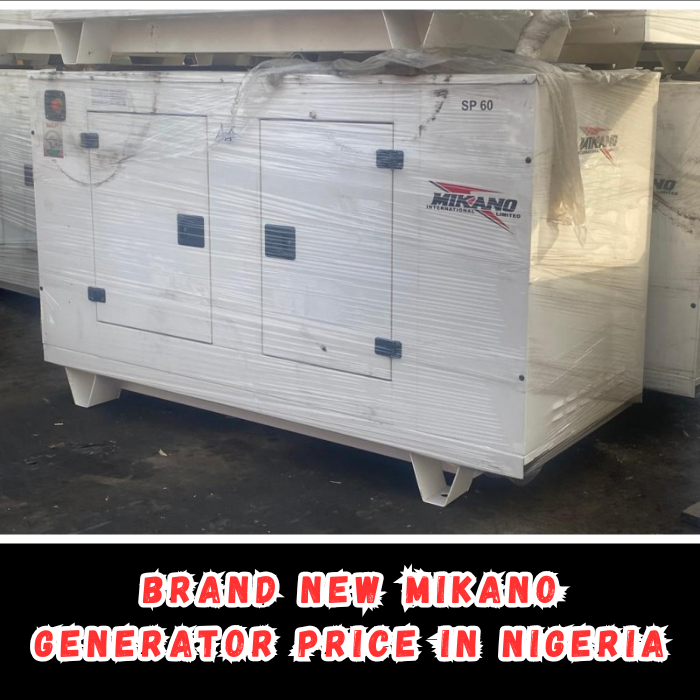
Current Brand New Mikano Generator Prices in Nigeria
The price of a brand new Mikano generator in Nigeria depends heavily on the generator capacity, engine type, phase configuration, fuel type, and whether you are buying a compact unit for a small business or a heavy-duty industrial generator for large-scale operations. There is no single price that fits every Mikano generator because the brand covers a wide range of power solutions, from smaller units suitable for homes and shops to large diesel generators designed for factories, estates, banks, and commercial facilities.
For smaller power needs, a brand new Mikano generator will naturally cost far less than the large industrial models. If you are buying a unit for a small office, a supermarket, a church, or a medium-sized home that needs to run essential appliances, your budget will be very different from someone buying a generator for a production facility or hotel. This is one of the biggest reasons buyers get confused when they search online. They see different Mikano prices and assume the market is inconsistent, when in reality they are looking at completely different generator capacities.
In Nigeria, brand new Mikano generators are often priced higher than many competing brands because they are generally positioned as premium power solutions. Buyers are not only paying for the machine itself; they are also paying for brand reputation, build quality, availability of technical support, and the expectation of stronger long-term performance. For many businesses, that premium is worth it because power failure can cost far more than the price difference between a cheap generator and a reliable one.
To give a practical picture, here is the kind of price pattern buyers typically encounter in the Nigerian market. Smaller and mid-range brand new Mikano generators often fall into a lower pricing bracket compared to larger industrial units, while heavy-duty diesel-powered models can move into a very high price range. Once you begin looking at high-capacity generators for commercial or industrial use, pricing can rise sharply because of the engine quality, alternator design, control panel features, soundproofing, and installation requirements.
A brand new unit is also more likely to come with modern features and a cleaner service history, which adds to the cost. When I evaluate brand new generator pricing, I do not look at the purchase amount alone. I also look at what that price protects you from. A new generator usually reduces the likelihood of inherited faults, surprise repairs, hidden engine wear, and inconsistent performance. That peace of mind has real value, especially in a country like Nigeria where stable power is not something most homes or businesses can take for granted.
Another point worth understanding is that dealer pricing is not always the same across the country. A brand new Mikano generator in Lagos may not be priced exactly the same way in Abuja, Port Harcourt, Kano, or Enugu, especially when delivery, installation, local demand, and dealer markup are added into the equation. Some dealers include extras such as installation guidance, initial servicing, delivery, or a limited warranty arrangement, while others simply quote the machine price alone. That is why two buyers can ask for the “price of a brand new Mikano generator” and still get different figures.
If your interest is purely budget planning, the best way to think about a brand new Mikano generator is to group prices by use case. A small business buyer, a homeowner, and a factory owner are not shopping in the same category, even though all of them are searching for “Mikano generator price in Nigeria.” Once you identify the power load you need, the price range becomes easier to understand and compare.
Recommended: Brand New Mikano Generator Price in Nigeria (Current Price)
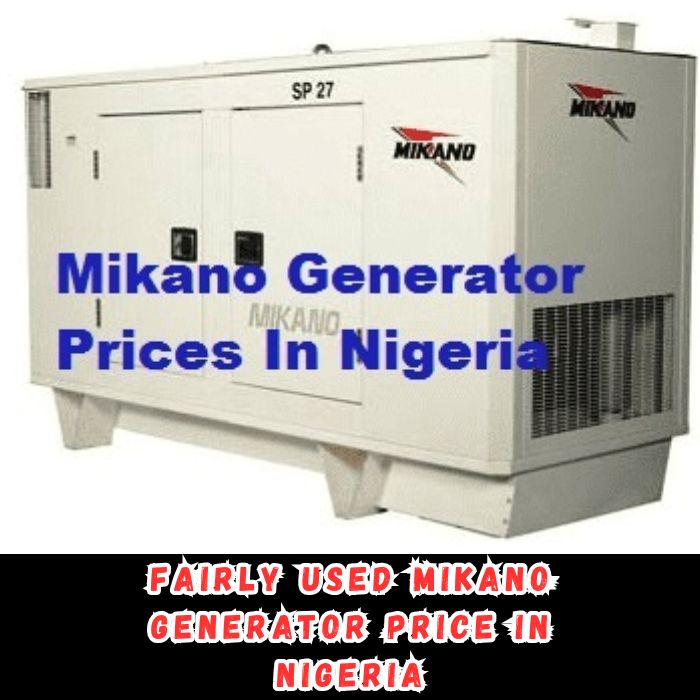
Current Fairly Used Mikano Generator Prices in Nigeria
Fairly used Mikano generators are attractive to many Nigerian buyers because they offer a lower entry price than brand new models. For someone working with a tighter budget, the difference can be substantial. A fairly used unit may allow a small business owner, workshop operator, school administrator, or landlord to get a Mikano generator without paying the full cost of a new one. On the surface, that sounds like a smart financial move, and in some cases it truly is. But fairly used pricing requires much more caution than brand new pricing.
The first thing to know is that there is no standard fixed price for a fairly used Mikano generator. Two generators with the same capacity can sell at noticeably different prices depending on age, engine condition, maintenance history, usage hours, country of use, and whether the unit was imported or used locally in Nigeria. A fairly used generator that has been maintained properly and has low operating hours will naturally command a higher price than another unit that looks similar on the outside but has already gone through years of heavy use.
This is where many buyers make costly mistakes. They focus too much on the visible price and not enough on the true condition of the generator. A fairly used Mikano generator can look neat, sound okay during a quick inspection, and still have hidden problems that only show up after a few weeks of use. Issues like weak alternator performance, engine overheating, poor fuel consumption, worn injectors, unstable voltage output, or excessive smoke can turn a “cheap deal” into a very expensive problem.
In the Nigerian market, fairly used Mikano generators often come from different sources. Some are locally used and resold after serving homes, offices, or businesses. Others are imported used units. Both categories can be good or bad depending on how they were handled before sale. I have seen imported units that performed well because they were properly refurbished and tested, and I have also seen local units that remained reliable because the previous owner maintained them carefully. The opposite is also true. A generator’s history matters more than the label “fairly used.”
Price variation in this category is often wider than many buyers expect. A fairly used Mikano generator may be much cheaper than a new one, but that lower price is usually tied to uncertainty. If the seller cannot clearly explain the service history, engine condition, load capacity performance, or reason for sale, the lower price should not excite you too quickly. It should make you ask harder questions.
In practical terms, fairly used Mikano generators can be ideal for buyers who understand generator inspection or have access to a trusted technician. If you know how to evaluate engine sound, panel condition, output stability, fuel system health, and maintenance signs, you can sometimes find a strong machine at a very reasonable price. But if you are buying blindly, the used market is where many people lose money. What appears cheaper at purchase may become more expensive after repairs, replacement parts, transport, rewiring, and repeated technician visits.
That is why I always tell buyers that the price of a fairly used Mikano generator should never be judged in isolation. You should look at the purchase cost plus the likely cost of restoring or stabilizing the machine after purchase. Once you do that, the real comparison between fairly used and brand new starts to become much clearer.
Recommended: Fairly Used Mikano Generator Price in Nigeria (2026)
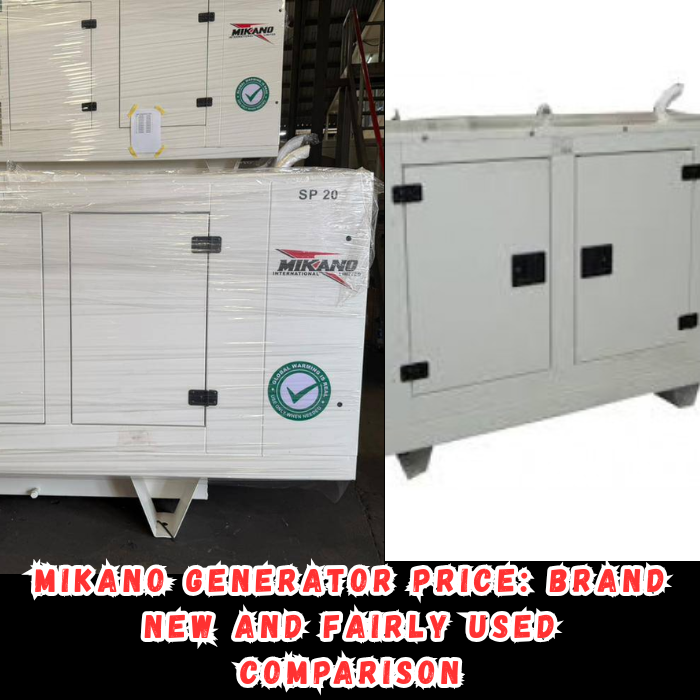
Brand New vs Fairly Used Mikano Generator Price Comparison
When people compare brand new vs fairly used Mikano generator prices, the obvious difference is the amount you pay upfront. Brand new units cost more. Fairly used units cost less. But if that is where the comparison ends, it becomes a shallow comparison that can mislead buyers. The better question is not simply, “Which one is cheaper?” The better question is, “Which one gives me the best value for my budget, power needs, and long-term usage?”
A brand new Mikano generator gives you a cleaner starting point. You are paying for fresh components, no previous wear, and a lower chance of immediate repair issues. In most cases, you also get stronger confidence in performance, especially if the unit is purchased from a reliable source. That higher price is not just about the brand name; it reflects lower uncertainty. For businesses that cannot afford downtime, that matters a lot. A hotel, hospital, supermarket, production line, or office complex will often prefer a new unit because the cost of power failure may be more damaging than the cost of the generator itself.
A fairly used Mikano generator, on the other hand, can save you a significant amount at the point of purchase. That is the strongest argument in its favor. If you have a modest budget and you need a Mikano generator without stepping into the price range of a new one, the fairly used market may look like the most realistic option. But that lower entry cost often comes with more risk. You may need to inspect thoroughly, replace a few components, service the machine immediately, or spend extra money correcting issues that were not obvious during purchase.
A simple way to understand the comparison is this: brand new usually costs more to buy but less to worry about, while fairly used usually costs less to buy but more to investigate. That does not mean every used generator is a bad deal. Far from it. Some fairly used Mikano generators are genuinely worth buying, especially when they come from trustworthy sellers and pass proper inspection. The point is that the lower price should never be interpreted as automatic savings.
Here is a practical example. Imagine two buyers need a generator for a medium-sized business. Buyer A purchases a brand new Mikano generator at a higher price and begins using it with minimal issues beyond regular servicing. Buyer B buys a fairly used Mikano generator for much less, but within three months spends additional money on injector work, battery replacement, rewiring, and technician call-outs. At that point, the price gap between both buyers may shrink more than expected. In some cases, Buyer B may even end up spending close to the cost of a new unit while still owning a used machine.
That is why a true comparison should look at the following:
- Initial purchase cost
- Expected maintenance and repair cost
- Fuel efficiency
- Reliability under load
- Availability of spare parts and service support
- Expected lifespan after purchase
- Risk of hidden faults
- Suitability for home, business, or industrial use
Once you weigh all of these factors together, the difference between brand new and fairly used Mikano generator prices becomes more meaningful. One may be cheaper at the start, but the better choice depends on how long you want to use the generator, how critical your power needs are, and how much risk you can realistically tolerate.
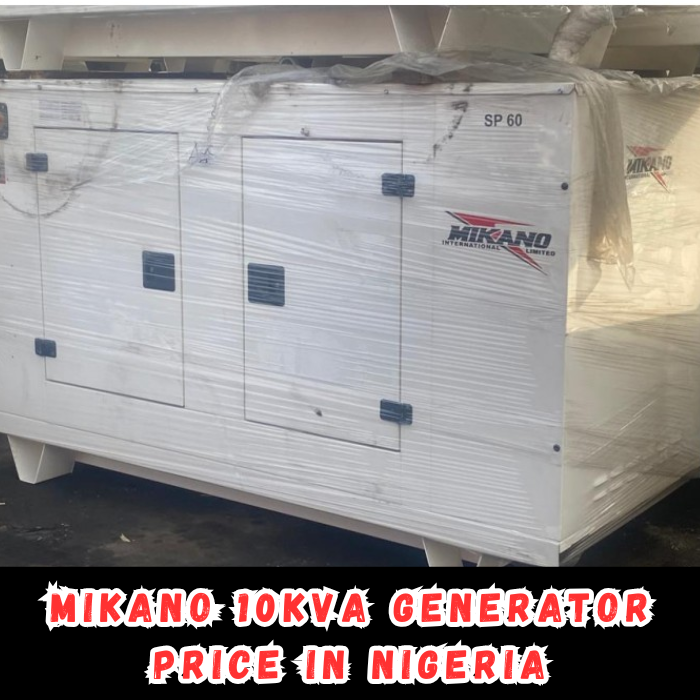
Read: Mikano 10kVA Generator Price in Nigeria: Current Cost, Features, & What to Know
What Affects Mikano Generator Prices in Nigeria?
Whether you are buying a brand new or fairly used Mikano generator, price is influenced by several factors beyond just the Mikano name. This is important because many buyers assume a seller is overpricing a generator when, in reality, the final amount may be shaped by features or conditions the buyer has not considered. Once you understand the major pricing factors, it becomes much easier to judge whether a quoted price is fair.
One of the biggest factors is generator capacity, usually measured by how much electrical load the generator can carry. A unit built to power a few appliances, office systems, or a small commercial setup will not cost the same as one designed to run a large building, industrial equipment, or multiple heavy machines. As capacity rises, price rises too. This is usually the first major divider in Mikano generator pricing.
Another major factor is fuel type and engine design. Diesel generators often dominate the Mikano market for commercial and industrial use because they are built for heavier duty performance and longer running hours. But diesel-powered systems, especially higher-capacity ones, often come at a higher purchase price. The engine quality, efficiency, and durability all contribute to the final cost.
The condition of the generator also plays a huge role, especially in the fairly used market. A used Mikano generator with clean servicing history, low operating hours, a healthy engine, and stable output will command a higher price than a neglected unit with visible wear. Buyers sometimes complain that one fairly used unit is “too expensive” compared to another, but if the better-priced one is in far stronger condition, the difference may be justified.
There is also the issue of soundproofing and enclosure quality. Some generators are sold in soundproof canopies, while others may have different enclosure standards or control features. A quieter, better-protected unit can cost more, especially if it is designed for use in residential or commercial areas where noise control matters.
Exchange rate and import costs are another major influence in Nigeria. Since many generator components or complete units are tied to importation, fluctuations in the naira can affect final prices significantly. This is one reason Mikano generator prices can change over time even when the same model is being discussed. Import duties, transportation, clearing costs, and dealer logistics all find their way into the final market price.
The seller or dealer source matters too. An authorized or established dealer may charge more than an informal seller, but that higher price may come with better product confidence, after-sales guidance, installation support, or a more transparent transaction. Meanwhile, a private seller may offer a cheaper price but without any assurance after the sale is completed.
Finally, market demand also shapes price. During periods when businesses and households are aggressively looking for backup power solutions, prices can feel tighter and negotiation becomes harder. When supply is limited or foreign exchange conditions become unstable, buyers may notice price jumps even without any major change in the generator itself.
All of these factors explain why asking, “How much is Mikano generator in Nigeria?” is only the beginning. To get a useful answer, you have to go one step further and ask, “Which Mikano generator, in what condition, for what purpose, and from which source?” That is where the real pricing conversation begins.
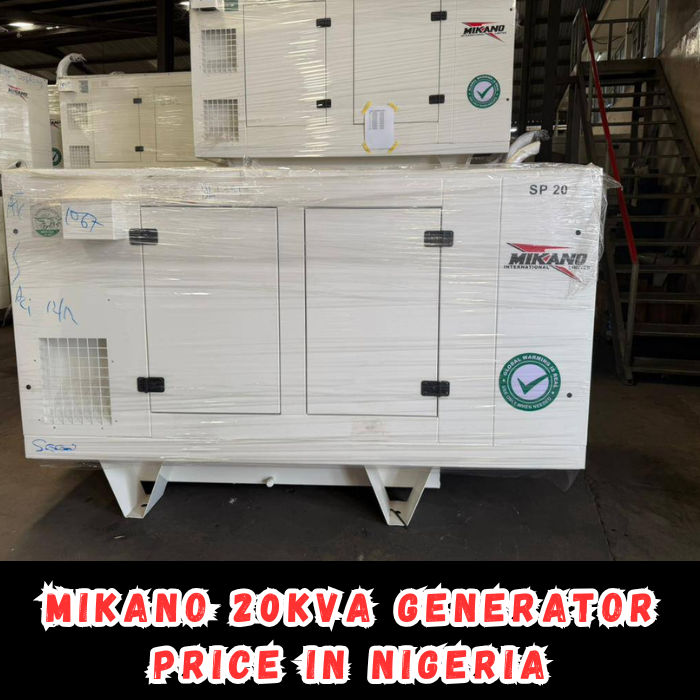
Read: Mikano 20kVA Generator Price in Nigeria (Both Fairly-Used and Brand New Prices)
Pros and Cons of Buying a Brand New Mikano Generator
Buying a brand new Mikano generator is usually the safest route for anyone who values reliability, predictable performance, and fewer surprises after purchase. In the Nigerian market, where power supply can be inconsistent and many homes and businesses depend heavily on backup electricity, that kind of reliability is not a small advantage. It can be the difference between smooth daily operations and constant disruption.
The biggest advantage of a new Mikano generator is peace of mind. You are starting with a machine that has not been previously stressed by another owner, overloaded on a site you know nothing about, or patched up to look presentable for resale. The engine, alternator, wiring, panel, and supporting components are all in fresh condition. That reduces the risk of immediate breakdown and gives you a much better chance of getting stable performance from day one.
Another strong benefit is lifespan. A brand new generator generally gives you a longer usable life ahead, provided you maintain it properly. That matters for buyers who are thinking beyond today’s price tag and focusing on what the machine will deliver over the next several years. If your generator is meant to serve a school, office, event center, supermarket, production facility, or a home with heavy daily dependence on backup power, long-term durability should not be treated lightly.
Brand new units are also easier to plan around. You can budget for fuel, routine servicing, oil changes, and periodic maintenance without worrying too much about inherited mechanical issues. That makes financial planning more predictable. For businesses, this is a major advantage because downtime often costs more than maintenance. If a company loses hours of operation due to generator failure, the financial damage may easily exceed the amount saved by choosing a cheaper used unit.
There is also the issue of confidence in output. A new Mikano generator is more likely to deliver its expected performance under load without the instability that can come from wear and tear. For equipment-sensitive environments such as medical facilities, data-driven offices, production lines, or businesses using expensive electronics, stable power output is not optional. It is part of protecting the rest of the investment.
That said, buying brand new is not perfect for every buyer. The most obvious downside is price. A new Mikano generator can demand a very serious budget, especially once you move beyond small and mid-range capacities. For many individuals and small businesses, that upfront cost can be difficult to carry. Even if the machine is worth it over the long term, not everyone has the cash flow to make that kind of purchase comfortably.
Another downside is that some buyers overbuy when they choose new. They become so focused on buying the “best” that they end up paying for more capacity than they actually need. A shop that only needs to power a few essentials should not automatically be shopping like a factory owner. The smarter move is to size the generator correctly rather than assume a larger, more expensive new unit is always the best decision.
So, if I were to sum it up simply, the pros of buying a brand new Mikano generator are reliability, longer lifespan, lower immediate repair risk, and stronger performance confidence. The cons are mostly tied to the higher upfront cost and the possibility of stretching your budget too far. For buyers who can afford it and genuinely need dependable power, a brand new unit often makes the most sense.
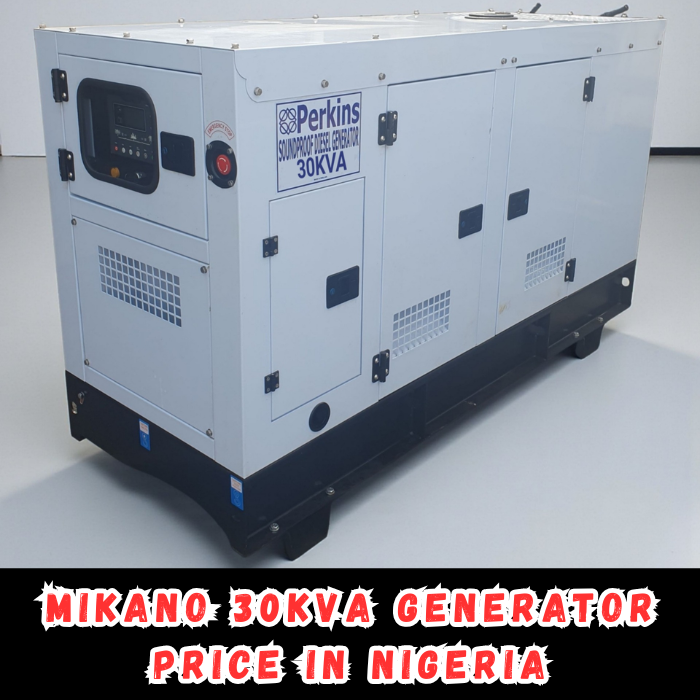
Read: Mikano 30kVA Generator Price in Nigeria (Both Fairly-Used and Brand New Prices)
Pros and Cons of Buying a Fairly Used Mikano Generator
A fairly used Mikano generator appeals to a different kind of buyer. In most cases, the attraction is straightforward: it offers access to the Mikano brand at a lower purchase price. For many Nigerian homes and businesses, that lower entry point is what makes the option attractive in the first place. Instead of waiting indefinitely to afford a new unit, a buyer can get a fairly used generator and start solving their power problem immediately.
The biggest advantage is cost savings at the point of purchase. This is where fairly used units have their strongest appeal. A buyer with a limited budget may be able to buy a higher-capacity used Mikano generator for the same amount that would only secure a smaller new generator. In practical terms, that can be very tempting. If the machine is in good condition, the buyer may get solid value without paying the premium attached to a brand new unit.
Another advantage is that the used market sometimes creates room for smart deals. Sellers who need quick cash, businesses upgrading their power systems, or importers moving stock may offer generators at prices that are genuinely attractive. If the buyer understands what to inspect, or better still brings along a trusted technician, a fairly used Mikano generator can be a cost-effective purchase.
Fairly used generators can also make sense for buyers with less demanding usage patterns. For example, if the generator is not going to run for very long hours every day and is only needed as occasional backup, a carefully selected used unit may do the job well without forcing the buyer into the financial weight of a new machine. In that situation, the lower purchase cost can be a practical advantage rather than a compromise.
But this is where the warning comes in: the fairly used market is where price can easily distract buyers from risk. The biggest downside of buying a used Mikano generator is uncertainty. Unless you know the machine’s history, how it was maintained, how heavily it was used, and what repairs it has gone through, you are buying with a level of risk that does not exist with a new unit.
Some used generators are sold because the previous owner is upgrading. Others are sold because the machine has become troublesome. If you cannot tell the difference, you may inherit a problem disguised as a bargain. Hidden engine wear, weak alternator output, poor starting, overheating, unstable voltage, or fuel inefficiency may not be obvious during a short inspection. Yet those are exactly the kinds of issues that can drain your budget after the sale.
There is also the issue of maintenance catch-up. A fairly used generator may need immediate servicing, battery replacement, rewiring, injector attention, filter changes, or panel work before it can deliver dependable service. That means the real cost of buying used is often higher than the amount you hand over on purchase day. If you do not account for that, you may misjudge the true value of the deal.
So while a fairly used Mikano generator can be a good option, it is only a good option when the machine is genuinely sound and the buyer understands what is being purchased. The pros are lower upfront cost and the chance to get a better capacity within a limited budget. The cons are hidden faults, uncertain history, higher repair risk, and the possibility that “cheap” turns expensive very quickly.
Which One Should You Buy: Brand New or Fairly Used?
This is the question most buyers actually care about, and the answer depends less on hype and more on your situation. I do not believe there is a universal answer that fits every buyer. The right choice depends on your budget, the importance of reliable power in your daily operations, how long you intend to use the generator, and how much risk you are willing to take.
If you are buying a generator for a business where downtime will cost money, I lean strongly toward brand new if the budget allows it. A hospital, office complex, event center, school, production space, or commercial building usually needs consistency more than it needs a bargain. In these environments, generator failure can disrupt operations, damage customer confidence, affect equipment, or create direct financial losses. In that kind of setting, paying more upfront for a new Mikano generator often makes business sense.
The same applies if you are not knowledgeable about generators and do not have access to a trustworthy technician. A new generator is far more forgiving for the average buyer because it removes many of the hidden risks that come with used machines. You are paying for certainty, and certainty has value.
On the other hand, a fairly used Mikano generator can be the smarter choice if your budget is limited but you still want a quality brand, especially if you know how to inspect a generator properly or have a competent technician to guide you. It can also make sense if your usage is moderate rather than intense. For example, if the generator is mainly backup for a small office, a workshop, or a home that does not run heavy loads for extended hours, a carefully selected fairly used unit may be enough.
I also look at the buyer’s timeline. If you need a generator that will serve you for many years with fewer interruptions, the brand new option usually offers a stronger long-term foundation. If you need a practical solution right now and can manage the risk of used equipment, then fairly used may be the more realistic route.
A simple way to decide is to ask yourself four questions:
- How critical is power to my home or business?
- Can I afford the higher upfront cost of a new unit without putting myself under financial strain?
- Do I have the knowledge or technical support to inspect a used generator properly?
- Am I buying for long-term heavy use or short-to-medium-term backup needs?
If your answers point toward reliability, long-term use, and low tolerance for risk, brand new is usually the better option. If your answers point toward budget limitations, lighter use, and access to proper inspection, then a fairly used Mikano generator may be a smart purchase. The goal is not to buy the cheapest option or the most expensive one. The goal is to buy the one that matches your real needs without creating avoidable regret.
Tips for Buying a Fairly Used Mikano Generator Without Regret
If you decide to buy a fairly used Mikano generator, the smartest thing you can do is slow down and inspect properly. The used generator market rewards careful buyers and punishes rushed ones. I have seen people spend a large amount on a used generator simply because the body looked clean and the seller sounded convincing. That is not inspection. That is gambling.
Start with the engine condition. A generator can be repainted, cleaned, and polished, but engine health is what matters most. Listen to how it starts, how smoothly it runs, whether it smokes excessively, and whether there are signs of knocking, vibration, or unstable sound. A healthy machine should not struggle to start or sound rough under basic operation.
Ask about service history. Some sellers will not have complete records, but even the way they answer your questions can tell you a lot. If a seller cannot explain how the generator was used, how often it was serviced, what parts have been replaced, or why it is being sold, that should make you more cautious. The more vague the story, the more careful you should be.
You should also test the generator under load if possible. A generator that runs without load is not telling you the full story. What matters is how it behaves when actual appliances or equipment are connected. Does the voltage remain stable? Does the engine struggle? Does it overheat? Does it trip unexpectedly? These are practical questions that reveal more than a cosmetic inspection ever will.
Bring a trusted technician if you are not experienced with generators. This is one of the best investments you can make during the buying process. A competent technician can spot warning signs that the average buyer will miss. That single inspection fee may save you from a much bigger repair bill later.
It is also wise to inspect the alternator, battery, panel, cables, filters, and general wiring condition. Oil leaks, rust, loose connections, signs of overheating, or obvious modifications can point to deeper issues. A used generator does not have to be perfect to be worth buying, but the price should reflect its condition honestly.
Finally, buy from a source that gives you enough room to ask questions and inspect properly. A seller who pressures you to pay immediately, avoids load testing, or becomes defensive when you ask technical questions is not making the process safer for you. In the used market, caution is not overthinking. It is part of buying wisely.
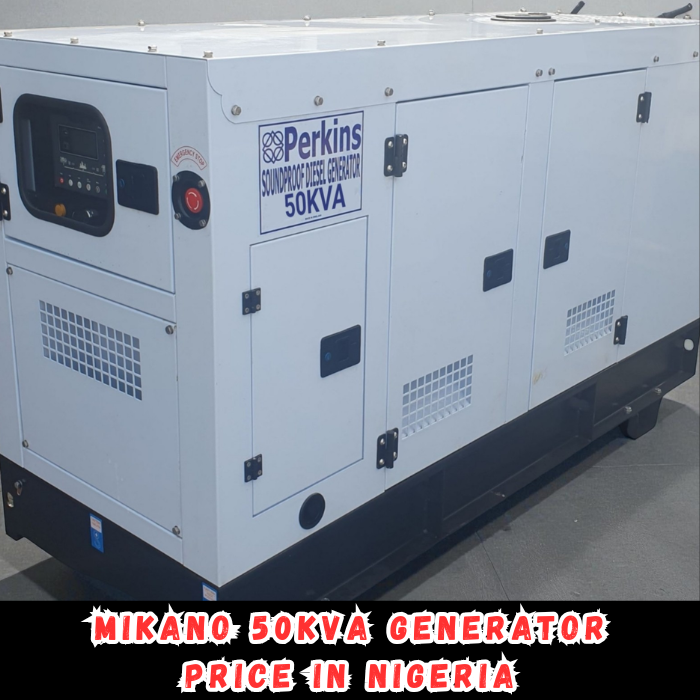
Read: Mikano 50kVA Generator Price in Nigeria (Both Fairly-Used and Brand New Prices)
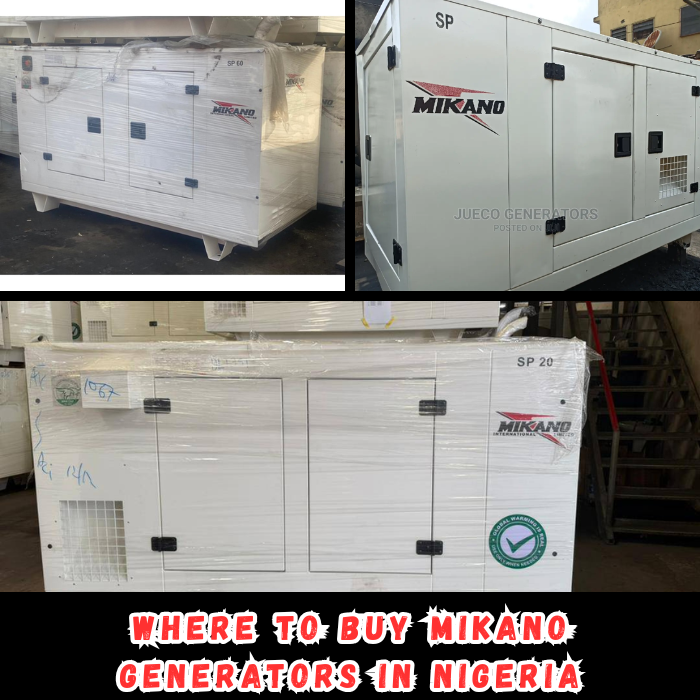
Where to Buy Mikano Generators in Nigeria
Where you buy a Mikano generator matters almost as much as what you buy. A good machine bought from a questionable source can still become a bad experience if there is no transparency, no support, and no honest information about the generator’s condition. Whether you are buying brand new or fairly used, the seller plays a major role in how safe the transaction will be.
For brand new Mikano generators, it is usually smarter to buy from reputable dealers, established distributors, or recognized power equipment sellers with a clear business presence. The reason is simple: you want a cleaner transaction, better product information, and stronger confidence that the generator is actually what it is claimed to be. In some cases, buying from the right source can also make it easier to ask about installation, servicing, parts availability, and after-sales guidance.
For fairly used generators, the buying environment becomes even more important. If possible, avoid making a purchase purely based on attractive photos and a low price online. A generator is not the kind of machine you should buy casually because the advert looked convincing. You need room for inspection, testing, and verification. If the seller cannot support that process, the risk increases.
Some buyers purchase from generator dealers that handle both new and used units, while others buy directly from businesses, private owners, or equipment resellers. None of these routes is automatically bad, but each requires a different level of caution. What matters most is the quality of inspection, the honesty of the seller, and whether you are getting enough information to judge the generator properly.
If I were advising a buyer directly, I would say this: do not choose a seller based only on price. Choose based on trust, transparency, and the condition of the machine in front of you. A cheaper price from the wrong source can cost more in the end.
Final Verdict
When it comes to Mikano generator price in Nigeria, the real decision is not just about numbers. It is about balancing cost, reliability, risk, and long-term value. A brand new Mikano generator is usually the stronger option for buyers who want peace of mind, dependable performance, and a longer service life with fewer immediate repair concerns. It costs more upfront, but in many cases, that higher cost buys stability.
A fairly used Mikano generator can still be a smart buy, especially for budget-conscious buyers who know how to inspect properly or have a trusted technician involved. The lower purchase price can make Mikano ownership more accessible, and in the right condition, a used unit can deliver solid value. But that value only exists when the generator is genuinely sound. Without proper inspection, the savings can disappear quickly.
If I had to reduce the whole decision to one simple principle, it would be this: buy brand new when reliability is critical and your budget can carry it; buy fairly used only when the machine has been properly vetted and the price truly reflects its condition. That is the comparison that matters most, and it is the one that helps buyers make a smarter power investment instead of an emotional one.