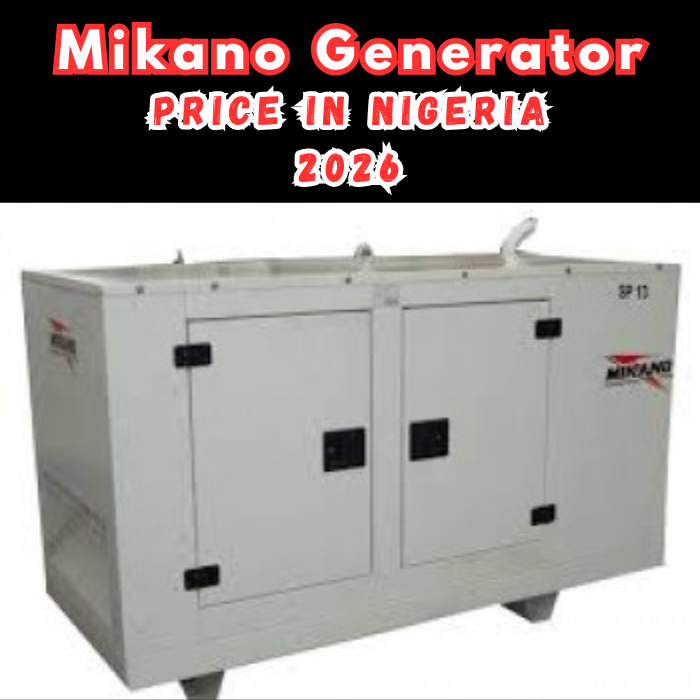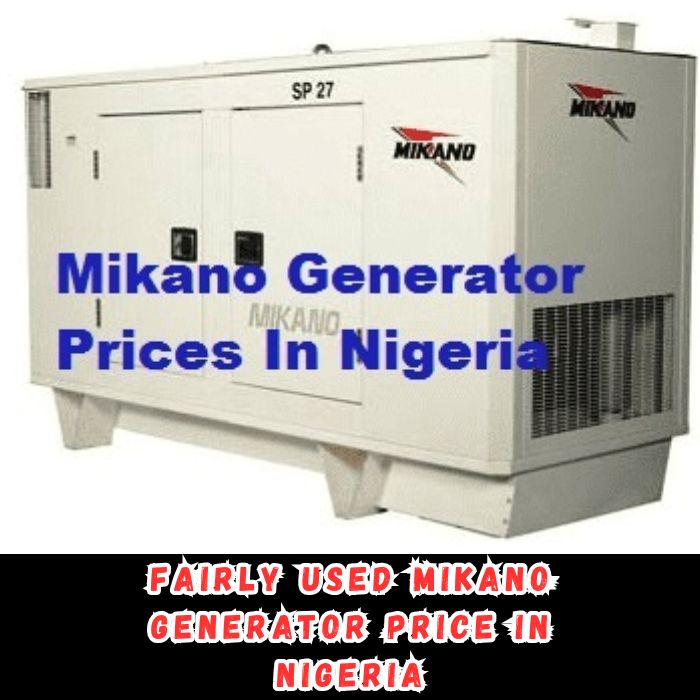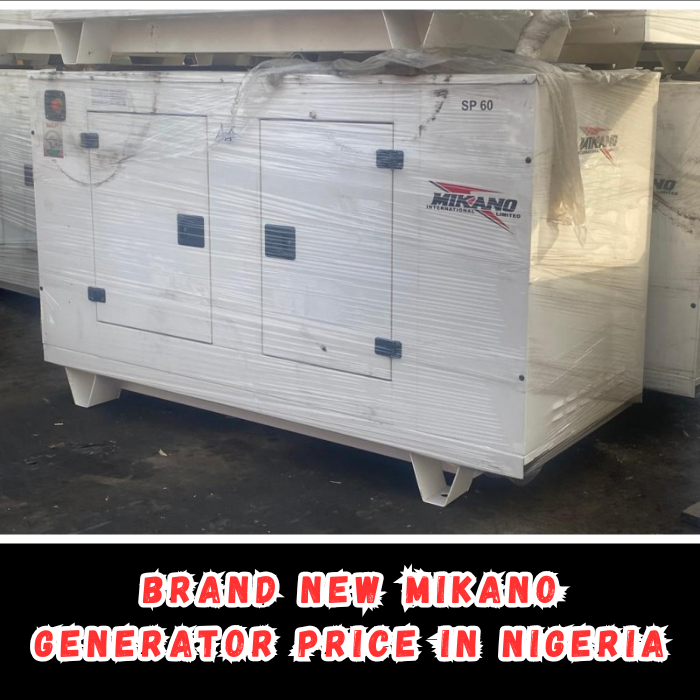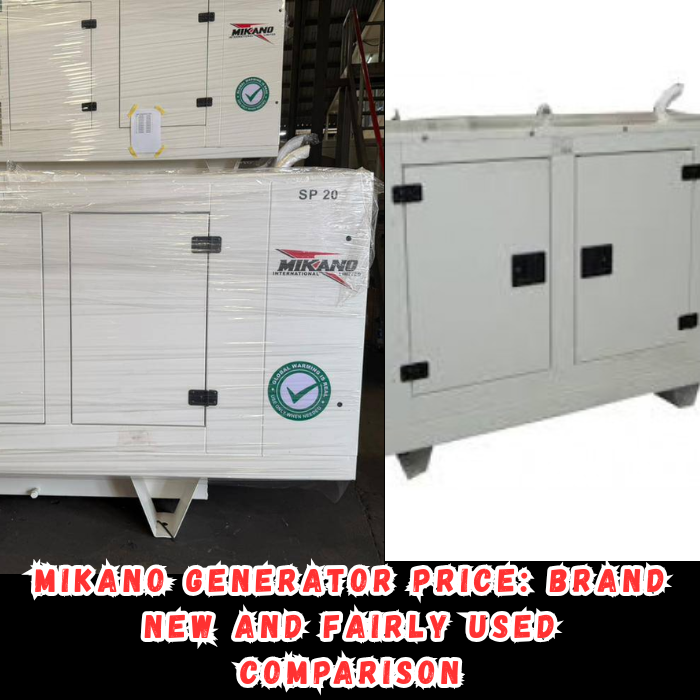
If you are searching for the current Mikano 50kVA generator price in Nigeria, chances are you are already past the stage of asking whether Mikano is a good brand. At 50kVA, this is no longer the kind of generator people buy casually. It is a serious power solution for businesses, commercial properties, event centres, schools, hospitals, estates, farms, worship centres, and even large homes with heavy electricity demands. The real question most buyers want answered is simple: how much does a Mikano 50kVA generator cost in Nigeria, and is it better to buy a brand-new one or go for a fairly used unit?
That is exactly what this guide is designed to answer. I have seen many buyers make the mistake of focusing only on the advertised generator price without paying attention to the full cost of ownership. With a generator in this class, price alone does not tell the full story. The actual amount you will spend depends on whether the unit is brand new or fairly used, the engine condition, the specific Mikano series, installation requirements, soundproofing, and even your location in Nigeria. A 50kVA generator bought in Lagos may not end up costing the same as one delivered and installed in Abuja, Port Harcourt, Ibadan, Kano, or Enugu.
In this article, I will break down the price of a Mikano 50kVA generator in Nigeria, show the likely cost of both brand-new and fairly used models, explain what affects the price, and help you understand what this size of generator can realistically power. If your goal is to buy wisely and avoid paying too much for the wrong machine, this guide will give you the practical insight you need.
Mikano 50kVA Generator Price in Nigeria
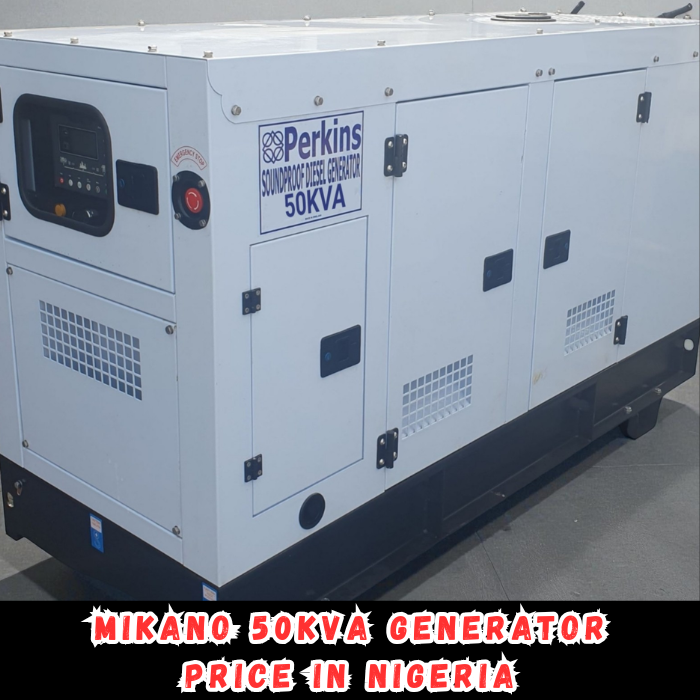
The price of a Mikano 50kVA generator in Nigeria typically falls within two broad ranges depending on condition: brand-new units sit at the higher end, while fairly used units are significantly cheaper but vary much more in quality and value. In today’s Nigerian market, a brand-new Mikano 50kVA generator can cost anywhere from about ₦28,000,000 to ₦45,000,000 or more, while a fairly used Mikano 50kVA generator may fall within ₦12,000,000 to ₦25,000,000, depending on usage history, engine condition, soundproof enclosure, and whether it is a direct Nigerian-used unit or an imported used model.
That said, I always advise readers to treat generator prices in Nigeria as moving targets rather than fixed figures. Exchange rates, import duties, diesel engine availability, transport costs, and dealer margins all influence what you will actually pay. Mikano generators are also sold in different configurations, and not every 50kVA unit will carry the same features. One seller may be quoting for a fully soundproof diesel generator with automatic transfer capabilities, while another may be pricing a simpler configuration. On paper, both are “Mikano 50kVA generators,” but the value they offer can be quite different.
Another thing buyers should understand is that 50kVA does not belong to the entry-level generator market. This size is usually purchased for medium-to-heavy load applications, so the price naturally reflects that. When someone compares the cost of a 50kVA Mikano generator to a smaller 10kVA or 20kVA set, the difference can feel dramatic. But that difference makes sense when you consider what the machine is built to do: run multiple air conditioners, office equipment, pumping systems, freezers, production tools, lighting loads, and commercial appliances over extended hours with better stability than small residential generators.
If your main goal is to find the “best” price, it helps to shift your thinking slightly. The cheapest 50kVA generator is not always the smartest buy. What matters more is whether the generator gives you dependable output, manageable maintenance cost, good spare part support, and long-term value for the kind of load you intend to place on it. That is especially important with Mikano because the brand is often chosen by buyers who want a more serious and durable power solution, not just the lowest initial price.
Brand New Mikano 50kVA Generator Price in Nigeria
A brand-new Mikano 50kVA generator in Nigeria generally costs between ₦28,000,000 and ₦45,000,000+, depending on the exact model, engine specification, soundproofing level, control panel features, and the seller’s pricing structure. In some cases, the final amount can go higher if the generator comes with advanced accessories, installation support, delivery, or extra electrical integration work.
The reason brand-new units command such a high price is straightforward: you are paying for more than the engine alone. A new generator gives you a fresh service life, lower risk of hidden mechanical problems, cleaner operational history, and in many cases some form of manufacturer or dealer-backed support. For businesses and institutions that cannot afford power failure, this matters a lot. A school, hospital, office complex, hotel, cold room business, or event centre is usually not looking for a machine that merely starts; they need one that can carry load reliably for years.
In practical terms, a brand-new Mikano 50kVA generator is often the better fit for buyers who want predictability. The fuel system, alternator, engine components, cooling system, and control unit have not gone through years of wear. That reduces the chances of spending heavily on repairs soon after purchase. It also gives you more confidence when planning long daily runtime, which is common in Nigeria where many businesses rely on generators for several hours every day due to unstable public power supply.
However, the high purchase price means this option is not for every buyer. If you are running a small operation with limited capital, spending over thirty million naira or more on power equipment can put pressure on cash flow. That is why some buyers move toward the fairly used market. Still, if your budget can support it and your business depends heavily on uninterrupted electricity, buying a brand-new unit often makes financial sense in the long run because it reduces the chances of early breakdown, expensive emergency repairs, and unplanned downtime.
It is also worth noting that “brand new” should never be accepted at face value without verification. In the Nigerian market, I have seen cases where a generator is described as new simply because it looks clean or has been repainted, even when it has already been used. A true brand-new Mikano 50kVA generator should come from a trusted dealer or a credible source with clear documentation. Before paying, always confirm the model details, manufacturing information, engine and alternator specification, and any warranty or after-sales terms attached to the purchase.
Fairly Used Mikano 50kVA Generator Price in Nigeria
A fairly used Mikano 50kVA generator in Nigeria usually costs between ₦12,000,000 and ₦25,000,000, although some units may sell below or above this range depending on age, working condition, and how urgently the seller wants to dispose of it. The wide price gap in the fairly used market is one of the first things buyers notice, and there is a reason for that: no two used generators are truly equal, even when they share the same brand and capacity.
A fairly used generator can be a very smart purchase when you know what to look for. I have seen businesses save millions by buying a clean, properly maintained used Mikano generator instead of stretching their budget for a brand-new one. If the engine is sound, the alternator is healthy, the service history is decent, and the machine has not been overloaded for years, a fairly used 50kVA unit can still deliver strong performance. For buyers who need serious power but want to keep initial costs under control, this route can make sense.
The problem is that the used generator market in Nigeria also comes with risk. Some units have spent years powering welding shops, factories, event centres, or apartment blocks with little attention to routine servicing. Others may have overheating issues, poor compression, weak alternators, noisy engines, or hidden electrical faults that do not show up during a quick inspection. A generator may start and run for ten minutes when the seller demonstrates it, yet still have expensive problems waiting underneath. That is why I never advise anyone to buy a fairly used 50kVA generator based on appearance alone.
For example, imagine two sellers both advertising a “Mikano 50kVA generator” for sale. One is asking ₦14 million, and the other is asking ₦20 million. At first glance, the ₦14 million option looks like the obvious bargain. But if the cheaper unit has a tired engine, weak output under load, oil leaks, and a history of poor maintenance, you may end up spending several million naira fixing it. In that case, the more expensive but healthier unit becomes the better deal. This is why buyers need to assess total value, not just the headline price.
A fairly used generator is usually best for buyers who are price-conscious but still need commercial-grade power. It can work well for a growing business, a medium-sized church, a workshop, a school, or a commercial building where the budget cannot comfortably absorb the cost of a brand-new unit. But if you choose this route, inspection is everything. It is the difference between buying a useful asset and inheriting someone else’s power problem.
Price Difference Between Brand New and Fairly Used Mikano 50kVA Generators
The price gap between a brand-new and a fairly used Mikano 50kVA generator in Nigeria can be substantial, often running into ₦10 million to ₦20 million or more depending on the specific units being compared. That gap is exactly why many buyers hesitate. On one side is the comfort and lower risk of a new generator; on the other is the cost advantage of a used one. The right choice depends on what matters more in your situation: lower upfront spending or lower long-term uncertainty.
A brand-new unit offers peace of mind, a fresh service life, and better confidence in performance. A fairly used unit offers a lower entry cost and can free up capital for other business expenses. Neither option is automatically right or wrong. What matters is whether the generator’s condition, price, and expected workload match your real needs.
If you run a business where downtime is costly, the extra money for a new generator may be justified. But if you have technical support around you, can inspect properly, and find a genuinely clean used unit, a fairly used Mikano 50kVA generator can still be a cost-effective investment. The mistake is choosing based only on the cheapest price tag without thinking about maintenance exposure, fuel efficiency, and repair risk over the next few years.
Read: Mikano 30kVA Generator Price in Nigeria (Both Fairly-Used and Brand New Prices)
Factors That Affect the Price of a Mikano 50kVA Generator in Nigeria
If you have checked prices from different sellers and noticed that the figures are not exactly the same, that is completely normal. The price of a Mikano 50kVA generator in Nigeria is influenced by several practical factors, and understanding them will help you avoid confusion when comparing offers. Two generators may both be labeled “Mikano 50kVA,” yet one may cost millions more than the other because of differences in age, condition, configuration, or seller credibility.
The first major factor is whether the generator is brand new or fairly used. This is the biggest price divider in the market. A new generator comes with a fresh engine life, cleaner operational history, and lower risk of immediate repairs, so it naturally costs more. A fairly used unit is cheaper because part of its service life has already been consumed, and there is always some level of wear to consider. The problem is that many buyers stop their evaluation here, when in reality this is only one part of the price story.
The second factor is the engine condition and total usage history, especially for fairly used units. A used 50kVA generator that spent most of its life as a backup unit in an office may still be in excellent condition. Another one that ran long hours daily in a production workshop, event centre, or apartment complex may already have heavy engine wear even if it still looks neat from the outside. That difference affects price because experienced sellers know a healthier engine commands more money. The same goes for the alternator, cooling system, fuel system, battery setup, and control panel condition.
Another important factor is soundproofing and enclosure quality. Many buyers prefer soundproof diesel generators because they are quieter, neater, and more suitable for offices, homes, schools, hotels, and urban business environments. A soundproof Mikano 50kVA generator with a proper acoustic canopy will often cost more than a more basic setup. The condition of the enclosure also matters in fairly used units. A generator with a rusted or damaged canopy may be cheaper, but you may eventually spend money fixing it if appearance and noise control matter to you.
You should also consider model series and features. Mikano does not always sell generators in one identical format across all capacities. Some units come with better control panels, stronger electrical integration features, or more advanced monitoring functions. A generator with automatic transfer compatibility or a more refined control system may cost more than a simpler unit, even if both are 50kVA. This is one reason buyers should not rely only on the “kVA” label when comparing prices. The specification behind that label matters.
Location plays a role too. The cost of buying a Mikano 50kVA generator in Lagos may differ from what you will pay in Abuja, Port Harcourt, Kano, Ibadan, or other parts of Nigeria. Delivery charges, local dealer margins, and installation logistics can all affect the final amount. If the seller is including transport, offloading, installation support, and wiring integration, the quote may look higher than another seller’s offer that only covers the generator itself.
Finally, exchange rate movement and import-related costs remain a major influence in the Nigerian generator market. Mikano generators, like many heavy-duty power systems, are tied to broader import and currency realities. Once the naira weakens, generator prices often respond quickly. That is why a price you saw a few months ago may no longer be realistic today. If you are planning to buy soon, it is better to work with recent market figures than rely on old listings that may no longer reflect current reality.
What Can a Mikano 50kVA Generator Power?
One of the smartest questions to ask before buying any generator is not just “how much does it cost?” but also “what exactly can it power?” That question matters even more with a 50kVA generator because this is a serious commercial-capacity machine. Many buyers know they need “something strong,” but they are not always sure whether 50kVA is the right fit for their actual electricity demand.
A Mikano 50kVA generator is generally suitable for medium-to-heavy power use. Depending on the power factor, load type, and the way appliances are managed, this size of generator can support a wide range of setups. In practical Nigerian use, it can comfortably serve places such as medium-sized offices, supermarkets, schools, event centres, churches, restaurants, workshops, farms, cold rooms, filling station support systems, and large residential buildings with significant electrical load.
For example, a 50kVA generator may be able to power a combination of air conditioners, refrigerators, freezers, pumping machines, office computers, printers, security lighting, televisions, industrial fans, POS systems, routers, and general lighting circuits without struggling, provided the total load is properly calculated. It can also support equipment in commercial settings such as bakery machines, salon tools, small-scale production machines, and hospitality appliances, depending on startup load and how everything is distributed.
Let me put it in a simple real-world context. Imagine a medium-sized business complex in Nigeria with several office spaces, multiple split-unit air conditioners, lighting across different sections, water pumping, desktop systems, and basic commercial appliances. A properly matched 50kVA generator can be a very sensible power solution for that kind of environment. In another example, a school with classrooms, staff offices, fans, lights, computers, and pumping systems may also find 50kVA adequate, especially if the generator is not expected to run heavy industrial machinery at the same time.
That said, the key phrase here is “properly matched.” Generator sizing is not something I advise people to guess. A 50kVA unit can be too small for one buyer and unnecessarily large for another. If your equipment includes motors, compressors, large AC systems, welding tools, industrial ovens, or other heavy-starting loads, you need to factor in startup surge and not just running wattage. This is where many generator buyers get it wrong. They buy based on assumption, only to discover later that the generator is overloaded or underused.
So before buying a Mikano 50kVA generator, it is worth making a realistic list of what you want to power. If possible, involve an electrician or generator technician to estimate your load properly. That one step can save you from buying the wrong capacity, overspending on diesel, or stressing a generator beyond what it should carry.
Things to Check Before Buying a Fairly Used Mikano 50kVA Generator
If you decide to buy a fairly used Mikano 50kVA generator, inspection should be taken seriously. At this level of generator capacity, you are not buying a casual backup machine. You are buying a major asset that may cost tens of millions of naira and could become central to your business operations. A bad purchase at this level is expensive to correct, so it is worth slowing down and checking the right things before handing over your money.
The first thing I look at is the engine condition. A fairly used generator may start and still have deep mechanical problems hidden behind that first impression. Listen for unusual knocking sounds, excessive vibration, irregular idling, hard starting, or suspicious smoke from the exhaust. Blue smoke, for example, may point to oil burning, while black smoke can suggest fuel or combustion issues depending on the situation. Also check for oil leaks around the engine block and inspect whether the generator has signs of overheating, poor maintenance, or makeshift repairs.
Next, pay close attention to the alternator and output stability. A generator is not just about engine noise and movement; it must produce stable usable electricity under load. If possible, test the generator with a realistic load rather than allowing the seller to run it empty for a few minutes. A no-load test does not tell you enough. What matters is whether the unit can carry load smoothly without unstable voltage, abnormal vibration, overheating, or strange electrical behavior.
You should also inspect the control panel, battery system, cooling system, fuel tank, and soundproof canopy. A damaged control panel may be more than a cosmetic issue; it can affect operation, safety, and fault monitoring. Check whether the radiator is healthy, whether coolant circulation looks normal, and whether the battery setup appears properly maintained. If the soundproof canopy is badly rusted or the doors and latches are weak, you may end up spending money on repairs even if the engine itself is decent.
Another smart step is to ask about the generator’s usage history. Was it used as a backup unit that only came on during outages, or was it a daily workhorse powering a commercial facility for long hours every day? Was servicing done regularly? Has the engine ever been overhauled? Are there receipts, service records, or any maintenance notes to support the seller’s claims? Many sellers will not have perfect documentation, but the more you can verify, the better your chances of avoiding an expensive mistake.
If I were advising a buyer directly, I would say this plainly: do not inspect a fairly used 50kVA generator alone unless you truly know what you are doing. Bring along a trusted generator technician or diesel mechanic who understands commercial generators. The small fee you pay for inspection can save you millions in repairs. A clean-looking generator is not automatically a healthy generator, and a seller’s confidence should never replace technical verification.
Read: Mikano 20kVA Generator Price in Nigeria (Both Fairly-Used and Brand New Prices)
Is a Brand New or Fairly Used Mikano 50kVA Generator Better?
This is where many buyers want a simple yes-or-no answer, but the truth is more practical than that. A brand-new Mikano 50kVA generator is generally the better option if your budget can comfortably support it and you need maximum reliability. A fairly used Mikano 50kVA generator, on the other hand, can be the better option if you need to reduce upfront cost and you are able to buy carefully with proper inspection.
A brand-new unit is the safer route for businesses where downtime is expensive. If you run a hospital, a hotel, a school, a large office, a production line, or any operation where power failure can disrupt income or service delivery, a new generator often makes more sense. You are paying for cleaner history, lower repair risk, and more confidence that the machine can handle regular use without immediately demanding major maintenance. For many serious businesses, that peace of mind is worth the higher price.
A fairly used unit makes sense when capital is tighter and you still need heavy-duty power. This can be a practical move for a growing business, a church, a workshop, a farm, a warehouse, or a commercial property owner who needs strong backup power without stretching into the cost of a new machine. The condition of the specific generator matters more than the label “fairly used.” A well-maintained used generator can outperform a poorly handled one that simply looks newer.
In simple terms, I would frame it this way: if you can afford a brand-new Mikano 50kVA generator without damaging your cash flow, it is usually the more secure investment. But if buying new will strain your business too heavily, a fairly used unit can still be a solid choice as long as it is properly inspected and priced fairly. The wrong move is buying a used generator just because it is cheaper, only to spend the difference later on repairs, downtime, and frustration.
Where to Buy Mikano 50kVA Generator in Nigeria
When it comes to buying a Mikano 50kVA generator in Nigeria, where you buy from matters almost as much as what you buy. The safest route is usually to deal with reputable Mikano dealers, established generator suppliers, or trusted industrial equipment sellers with a track record you can verify. This is especially important if you are buying a brand-new unit and expect proper documentation, installation support, or after-sales assistance.
If you are buying a fairly used generator, the need for caution becomes even greater. Many used units are sold through open-market dealers, equipment merchants, business owners disposing of old stock, and online listing platforms. Some of these sellers are legitimate, but the used market also contains plenty of generators with unclear history, cosmetic refurbishing, or hidden faults. That is why I always recommend inspecting the machine physically and, where possible, buying from a source that allows testing under load and is transparent about the generator’s background.
For buyers in major commercial cities like Lagos, Abuja, Port Harcourt, Ibadan, Kano, and Onitsha, there are usually more options available because these cities have stronger industrial equipment markets. But availability should not rush your decision. It is better to spend extra time confirming a generator’s condition than to buy quickly because the seller claims the deal will disappear. A 50kVA generator is too expensive for guesswork.
One practical tip I often give is this: when comparing sellers, do not ask only for the price. Ask exactly what the price includes. Does it cover delivery? Installation? Load testing? ATS integration? Basic servicing before handover? Any short-term support if a problem appears immediately after purchase? These details can make one offer far better than another even when the headline price looks similar.
Read: Mikano 10kVA Generator Price in Nigeria: Current Cost, Features, & What to Know
Conclusion
The Mikano 50kVA generator price in Nigeria is not a one-figure answer because the market includes both brand-new and fairly used units, and the gap between them can be significant. In broad terms, you should expect a brand-new Mikano 50kVA generator to cost far more than a fairly used one, but the real buying decision goes beyond the advertised price. What matters is the condition of the generator, the type of load you want it to carry, the quality of the seller, and the long-term cost of keeping the machine running reliably.
If you ask me which option makes the most sense, my answer is simple: buy according to your power needs, budget strength, and tolerance for repair risk. If uninterrupted power is critical to your operations and you can afford the investment, a brand-new unit is usually the safer path. If your budget is tighter but you still need a commercial-capacity generator, a fairly used Mikano 50kVA generator can still be a good buy provided you inspect it properly and do not rush the process.
At 50kVA, you are dealing with a generator that can support serious work. That means the smartest buyers are not always the ones who spend the least; they are the ones who match the right generator to the right need and avoid costly mistakes at the point of purchase. If you approach the market with that mindset, you are far more likely to end up with a generator that gives you value rather than regret.