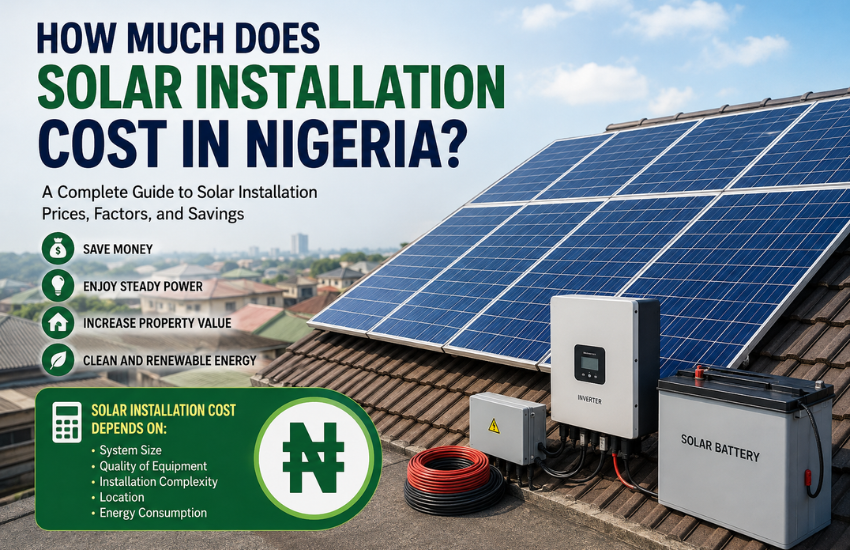
Solar installation has become one of the smartest investments for many Nigerians. With the rising cost of fuel, unstable electricity supply, and increasing electricity tariffs, more homeowners and businesses are turning to solar energy as a reliable long-term solution. One of the first questions almost everyone asks is, “How much does solar installation cost in Nigeria?”
From my experience, there isn’t a single price that fits every customer. The cost of installing a solar system depends on several factors, including your daily electricity consumption, the number of appliances you intend to power, the quality of the equipment you choose, and the complexity of the installation itself.
Some people only need a small solar setup to power lights, fans, televisions, and charge phones, while others require a complete system capable of running air conditioners, refrigerators, borehole pumps, office equipment, or even an entire commercial facility. Because of these differences, installation costs can vary significantly.
In this guide, I will explain the average cost of solar installation in Nigeria, what influences the final price, and what you should expect before investing in a solar energy system.
What Is the Average Cost of Solar Installation in Nigeria?
The average cost of solar installation in Nigeria ranges from around ₦600,000 for a basic residential setup to well over ₦20 million for large residential and commercial systems.
For many Nigerian homes, a complete solar installation usually falls somewhere between ₦1.5 million and ₦6 million, depending on the battery capacity, inverter size, solar panel output, and installation requirements.
For example, a small family living in a one-bedroom apartment may only need enough electricity to power:
- LED bulbs
- Ceiling fans
- Television
- Decoder
- Laptop
- Phone chargers
A relatively small solar system can comfortably handle these appliances, making the overall installation cost much lower than that of a larger household.
On the other hand, a family living in a four-bedroom duplex with multiple air conditioners, freezers, refrigerators, washing machines, water pumps, and other heavy electrical appliances will require a much larger solar system. This naturally increases the total installation cost because larger inverters, more batteries, and additional solar panels are needed.
It is also important to understand that solar installation is not simply about purchasing solar panels. A complete installation includes several major components working together as one system. These include the inverter, batteries, mounting structures, charge controller (where applicable), protection devices, cables, connectors, installation accessories, and professional labour.
Choosing quality equipment may seem expensive initially, but it often results in lower maintenance costs and a much longer system lifespan. In contrast, cheaper components can lead to poor performance, frequent breakdowns, and expensive replacements within a short period.
Solar Installation Cost by System Size
One of the biggest factors that determines how much you will spend is the size of the solar system you install. Larger systems generate more electricity and can support more appliances, but they also require more equipment.
Below is a general idea of what different system sizes can cost in Nigeria.
Small Solar Systems
Small systems are ideal for students, single-room apartments, kiosks, security posts, and small offices.
They typically power essential appliances such as lighting, fans, televisions, laptops, routers, and phone charging.
Depending on the quality of components, installation may cost anywhere between ₦600,000 and ₦1.5 million.
Although these systems are affordable, they are not designed for heavy electrical loads such as air conditioners or electric cookers.
Medium Residential Systems
Medium-sized installations are the most popular among Nigerian homeowners.
These systems can comfortably power multiple televisions, refrigerators, lighting, fans, internet devices, laptops, and several household appliances simultaneously.
A quality medium-sized installation often costs between ₦2 million and ₦5 million, depending on battery capacity and inverter size.
This option provides a good balance between affordability and performance, making it suitable for many families.
Large Residential and Commercial Systems
Large installations are designed for bigger homes, hotels, hospitals, schools, offices, churches, factories, and other commercial facilities.
These systems usually include:
- Higher-capacity inverters
- Larger battery banks
- More solar panels
- Advanced monitoring systems
- Additional electrical protection
The installation cost can start from ₦6 million and exceed ₦20 million, depending on the project’s size and energy requirements.
Although the upfront investment is substantial, businesses often recover a significant portion of the cost over time through reduced fuel consumption and lower generator maintenance expenses.
Factors That Affect Solar Installation Prices in Nigeria
Many people are surprised when they receive different quotations from different installers. The truth is that several factors influence the final installation cost.
Understanding these factors helps you compare quotations more accurately instead of focusing only on the lowest price.
Battery Type and Capacity
The battery is one of the most expensive parts of any solar installation.
Lithium batteries generally cost more than traditional tubular or gel batteries, but they offer several advantages. They charge faster, last longer, require little maintenance, and usually occupy less space.
Although lithium batteries have a higher initial cost, many homeowners consider them a better long-term investment because of their durability and efficiency.
Inverter Size
The inverter converts the stored DC power into AC electricity that your household appliances can use.
The larger your electricity demand, the bigger the inverter you will need.
For example, someone powering only lights and televisions will require a much smaller inverter than someone intending to run multiple air conditioners, refrigerators, and pumping machines simultaneously.
Higher-capacity inverters naturally increase the total installation cost.
Solar Panel Quality
Not all solar panels are manufactured to the same standard.
Premium panels generally produce more electricity, perform better under cloudy conditions, and maintain their efficiency for many years.
Lower-quality panels may cost less initially, but they often generate less power and degrade more quickly over time.
Choosing high-quality panels usually provides better value over the lifespan of the system.
Installation Complexity
The design of your building also affects installation costs.
A simple bungalow with an easily accessible roof is usually less expensive to install than a multi-storey building with limited roof access.
Additional wiring, stronger mounting structures, longer cable runs, and more labour can all increase the overall installation cost.
Location
Your location within Nigeria can also influence pricing.
Transportation costs, equipment availability, and labour charges vary from one state to another.
For example, installation costs in Lagos, Abuja, or Port Harcourt may differ from those in Osun, Oyo, or Kwara States due to logistics and local market conditions.
Estimated Cost Breakdown of a Complete Solar System
Many first-time buyers assume they are only paying for solar panels. In reality, the total installation price covers several essential components that work together to provide reliable electricity.
A typical solar installation budget may include:
- Solar panels
- Inverter
- Batteries
- Mounting structures
- Electrical cables
- Circuit breakers and protection devices
- Changeover and distribution accessories
- Installation labour
- Testing and system commissioning
Each of these components contributes to the overall performance of the system. Cutting costs by purchasing inferior parts may reduce the initial price, but it often leads to higher maintenance expenses and lower efficiency in the future.
When purchasing a solar system, I always recommend working with experienced installers who properly assess your energy needs before recommending equipment. This helps ensure you receive a system that matches your electricity consumption instead of paying for equipment that is either too small or unnecessarily oversized.
If you’re looking to buy a solar system or related power solutions in Osogbo, Osun State, one option to consider is Al-hakeem Integrated Technology, which supplies and installs power equipment for residential and commercial customers. You can also compare offers through online marketplaces like Jiji.ng, or visit reputable solar dealers, electrical equipment stores, and authorised distributors in major cities such as Lagos, Abuja, Port Harcourt, Ibadan, Kano, and other parts of Nigeria. When buying online or offline, always verify the seller’s reputation, product warranty, and after-sales support before making a purchase.
Cost of Solar Installation for Homes vs Businesses
The cost of solar installation differs significantly between residential and commercial properties because their electricity needs are rarely the same. A typical home usually powers household appliances such as lights, televisions, fans, refrigerators, laptops, washing machines, and sometimes one or two air conditioners. A business, on the other hand, may have to run office equipment, industrial machines, servers, cold rooms, water pumps, security systems, and several air conditioning units for extended hours.
Because of this difference, businesses generally require larger solar systems with higher-capacity inverters, more batteries, and additional solar panels. The installation process may also involve more complex wiring, multiple distribution boards, and backup integration with generators or the national grid.
For many Nigerian households, a properly designed solar system can comfortably provide electricity throughout the day and night while drastically reducing dependence on fuel-powered generators. Although the initial investment may appear high, homeowners often discover that their monthly spending on fuel, generator servicing, engine oil, and electricity bills reduces considerably after installation.
Businesses can experience even greater savings. Consider a supermarket that operates generators for 12 to 16 hours daily. Fuel expenses alone can consume a substantial portion of its monthly operating budget. By switching to solar energy, the business may reduce generator runtime significantly, allowing it to save millions of naira over several years.
Hotels, schools, hospitals, banks, religious centres, manufacturing companies, and corporate offices are among the organizations increasingly investing in large solar installations because stable electricity directly improves productivity and customer satisfaction.
Regardless of whether the installation is for a home or business, the most important step is conducting an accurate energy assessment. Installing a system that is too small can lead to constant power shortages, while purchasing one that is unnecessarily large means spending more money than required.
Is Solar Installation Worth the Cost in Nigeria?
For many Nigerians, the answer is yes.
Although the upfront cost of installing a solar system may seem expensive, it should be viewed as a long-term investment rather than a short-term expense. The amount many households spend on petrol or diesel every month can add up quickly, especially when generators are used daily.
For example, imagine a family that spends between ₦150,000 and ₦300,000 every month on fuel, generator servicing, engine repairs, and electricity bills. Over a few years, that amount could exceed the cost of purchasing and installing a quality solar system.
Besides reducing operating costs, solar energy offers several practical benefits.
Reliable electricity allows families to enjoy uninterrupted lighting, keep food fresh in refrigerators, work remotely without constant power interruptions, and operate essential appliances even during prolonged grid outages.
Businesses also benefit from improved operational efficiency. Offices experience fewer disruptions, retail stores can serve customers more consistently, and organizations become less vulnerable to fuel shortages or sudden increases in diesel prices.
Another major advantage is reduced maintenance. Unlike generators, solar systems have fewer moving parts, meaning they generally require less servicing. While batteries and certain components eventually need replacement, overall maintenance is often much lower than continuously operating fuel-powered generators.
From my experience, homeowners who invest in quality equipment from reputable brands usually enjoy better system performance, fewer breakdowns, and greater peace of mind than those who choose the cheapest available options.
How to Reduce the Cost of Solar Installation
Installing a solar system does not always mean purchasing the largest setup available. There are several practical ways to reduce the overall cost without sacrificing reliability.
The first step is understanding your actual electricity consumption. Many people overestimate the size of the system they need, leading to unnecessary expenses. A professional energy audit helps identify the appliances you use daily and recommends an appropriately sized system.
Another effective strategy is prioritizing energy-efficient appliances. Replacing old incandescent bulbs with LED lighting, choosing inverter air conditioners, and using energy-saving refrigerators can significantly reduce your electricity demand. Lower energy consumption means you may require fewer solar panels and a smaller battery bank.
It is also wise to invest in quality components from the beginning. While premium equipment costs more initially, it often lasts much longer and performs better than cheaper alternatives. Buying low-quality products simply because they are inexpensive may result in repeated repairs and replacements, costing more over time.
Comparing quotations from multiple reputable installers is equally important. Rather than selecting the lowest price immediately, compare what each quotation includes. Some installers may provide longer warranties, higher-quality batteries, better solar panels, or professional after-sales support that justifies a slightly higher price.
Finally, think about future expansion. If your budget is limited, you may choose a system that meets your current needs while allowing additional batteries or solar panels to be added later. This approach makes the investment more manageable without compromising long-term flexibility.
Where to Get Reliable Solar Installation Services in Nigeria
Choosing the right installer is just as important as selecting quality equipment. Even premium solar components can perform poorly if they are improperly installed.
When searching for a solar installer, look for companies with proven experience, positive customer reviews, clear warranty policies, and qualified technicians. Ask about previous projects similar to yours and request detailed quotations that explain exactly what is included.
If you are in Osogbo, Osun State, Al-hakeem Integrated Technology is one of the businesses you can consider for solar installation and power solutions. Working with an experienced local supplier can make it easier to access consultations, installation services, maintenance, and technical support when required.
For those who prefer shopping online, platforms such as Jiji.ng allow buyers to compare products and prices from different sellers. However, always verify the credibility of the seller before making payment. Check customer reviews, request product specifications, ask about warranty coverage, and confirm whether installation services are included.
You can also purchase solar equipment from authorised distributors, dedicated solar companies, electrical equipment dealers, and reputable power solution providers in major Nigerian cities, including Lagos, Abuja, Port Harcourt, Ibadan, Kano, Benin City, Enugu, and Kaduna.
Whenever possible, avoid buying solely based on the lowest price. Quality equipment, professional installation, and dependable after-sales support are usually worth paying for because they reduce the likelihood of expensive problems later.
Frequently Asked Questions About Solar Installation Costs
How much does it cost to install solar in Nigeria?
The total cost depends on your electricity needs, equipment quality, battery capacity, inverter size, and installation complexity. Small residential systems may start from around ₦600,000, while larger home and commercial installations can cost several million naira.
How many solar panels do I need for my house?
There is no universal answer because every household consumes electricity differently. The number of required panels depends on the appliances you intend to power, your daily energy usage, and the capacity of your inverter and battery bank.
How long does a solar installation last?
High-quality solar panels can last 25 years or more with proper maintenance. Batteries and inverters have different lifespans depending on their type, usage, and maintenance practices.
Can solar completely replace a generator?
Yes, in many situations it can. However, this depends on the size of the solar system and your electricity demand. Homes with high energy consumption may still choose to keep a generator as an emergency backup during periods of prolonged cloudy weather or unusually high power usage.
Is solar better than using a generator every day?
For many households and businesses, solar provides lower running costs, quieter operation, reduced maintenance, and cleaner energy compared to relying on generators every day. While generators remain useful as backup power sources, solar systems offer greater long-term savings for most users.
Final Thoughts
If you have been asking, “How much does solar installation cost in Nigeria?”, the most accurate answer is that it depends on the type of system you need. Factors such as your electricity consumption, inverter capacity, battery technology, solar panel quality, and installation requirements all influence the final price.
Rather than focusing only on the cheapest quotation, I recommend investing in a properly designed system that matches your energy needs and uses reliable components. A quality installation can provide dependable electricity for many years while reducing fuel expenses, lowering maintenance costs, and improving your overall energy independence.
Whether you are installing solar for your home, office, school, hotel, or business, taking time to compare installers, understand the equipment being offered, and work with reputable suppliers will help you make a smarter investment.
If you are located in Osogbo, Osun State, Al-hakeem Integrated Technology is one of the places to consider for purchasing solar equipment and professional installation services. You can also explore trusted online marketplaces such as Jiji.ng, as well as authorised solar dealers and power solution companies across Nigeria. Whichever option you choose, prioritise product quality, genuine warranties, and reliable technical support to ensure your investment delivers lasting value.